
Explore Learnic Insights
Read expert articles, tips, and updates on live learning, recorded courses, and test strategies to help you grow smarter every day.

Latest Articles
Stay updated with the latest insights from our educators and learning community.
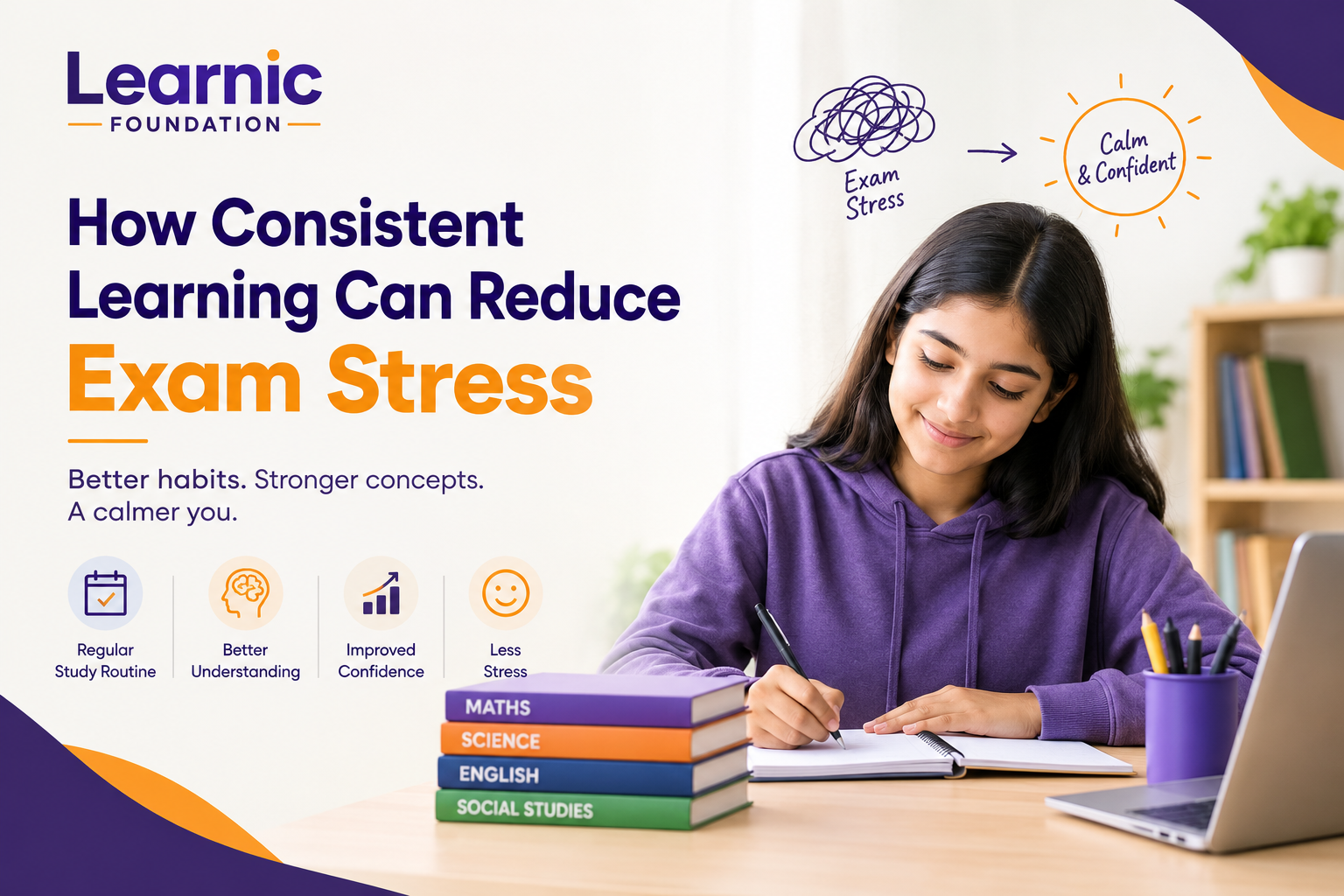
How Consistent Learning Can Reduce Exam Stress
Exams can be stressful for students, especially when preparation is delayed until the last few weeks. Long study hours, unfinished chapters, revision pressure, and fear of poor performance can make students feel overwhelmed. However, consistent learning can make exam preparation more manageable and less stressful. Instead of trying to complete everything at the last moment, students can develop a regular study routine that allows them to learn, practice, revise, and clear their doubts gradually. This approach not only improves academic performance but also helps students feel more confident before examinations.In this blog, we will understand how consistent learning can reduce exam stress and why developing regular study habits can make a significant difference in a student's academic journey.
What Is Consistent Learning?
Consistent learning means studying regularly instead of depending on last-minute preparation. It does not necessarily mean studying for several hours every day. The focus is on maintaining a realistic and structured learning routine.
For example, a student who studies for one or two focused hours every day, revises previous topics, completes assignments, and regularly practices questions can stay more prepared than a student who studies only when exams are approaching.
Consistency creates continuity in learning, making it easier for students to remember concepts and identify areas that need improvement.
Why Do Students Experience Exam Stress?
Exam stress can have several causes. Some common reasons include:
Incomplete syllabus
Lack of regular revision
Fear of low marks
Difficulty understanding concepts
Last-minute preparation
Poor time management
Pressure to meet expectations
Lack of confidence
When students continuously postpone their studies, the amount of work can accumulate. As exams get closer, this unfinished work can create anxiety and pressure.
A consistent learning routine helps prevent this buildup.
How Consistent Learning Can Reduce Exam Stress
1. It Prevents Last-Minute Preparation
One of the biggest causes of exam stress is trying to study the entire syllabus in a short period.
When students learn consistently, chapters are completed gradually throughout the academic session. This leaves more time for revision and practice before examinations.
Instead of thinking, “I have so much left to study,” students can approach exams knowing that most of their preparation is already complete.
2. It Improves Understanding of Concepts
Regular learning gives students enough time to understand difficult topics instead of simply memorizing them.
If a student does not understand a particular concept, they can revisit it, practice related questions, and ask for clarification. This is particularly important for subjects where concepts build upon one another.
Better understanding leads to greater confidence, and greater confidence can reduce exam anxiety.
3. It Makes Revision Easier
Revision becomes much easier when students have already studied their lessons regularly.
A student who revises small portions throughout the year does not have to relearn the entire syllabus before exams. Instead, revision can focus on important concepts, formulas, questions, and areas where the student needs additional practice.
This makes the final preparation period more organized and manageable.
4. It Helps Students Identify Learning Gaps Early
Consistent learning allows students to recognize their weaknesses before they become major problems.
For example, a student may discover that they are struggling with a particular mathematics chapter or have difficulty understanding a science concept. Identifying these gaps early gives them enough time to work on them.
Early identification of learning gaps can prevent unnecessary stress before exams.
5. It Builds Academic Confidence
Confidence does not develop overnight. It comes from preparation, practice, and understanding.
When students regularly complete lessons and solve questions, they begin to see their own progress. This can improve their confidence and reduce the fear associated with examinations.A student who knows that they have prepared consistently is more likely to approach exams with a positive mindset.The Connection Between Consistent Learning and Better Time Management Consistent learning also teaches students how to manage their time effectively. Instead of spending long hours studying randomly, students can divide their time between:
Learning new concepts
Revising previous topics
Practicing questions
Completing assignments
Clearing doubts
Taking short breaks
A structured routine makes studying more predictable and reduces the feeling that there is never enough time.
How Parents Can Encourage Consistent Learning
Parents can play an important role in helping students develop healthy study habits.
Rather than creating pressure around marks, parents can encourage children to focus on regular progress.
Some useful strategies include:
Create a Realistic Study Routine A study schedule should match the student's age, school timetable, subjects, and individual learning pace.
Encourage Regular Revision Short and frequent revision sessions can be more manageable than trying to revise everything immediately before an exam.Focus on Progress Instead of asking only about marks, parents can ask what the child learned, which topics were difficult, and whether they need help.
Encourage Questions
Students should feel comfortable asking questions when they do not understand something. Clearing doubts early can prevent confusion from building up. How Students Can Build a Consistent Learning Habit
Students do not need to completely change their routine overnight. Small steps can make consistency easier.
Set Daily Learning Goals Instead of setting a goal such as "I will study for five hours," students can create specific goals such as completing one topic, solving 20 questions, or revising a particular chapter.
Follow the 3-Step Learning Cycle
A simple approach is:
Learn → Practice → Revise
First understand the concept, then practice it through questions, and finally revise it after some time.
Keep Track of Difficult Topics Maintain a list of topics that need additional practice. This makes revision more focused.
Take Short BreaksStudying continuously for long periods can reduce concentration. Short breaks can help students return to their studies with better focus.Avoid Comparing Yourself With Others Every student learns at a different pace. Comparing progress with classmates can create unnecessary pressure.The goal should be consistent personal improvement, not constant comparison.
How Learnic Foundation Supports Consistent Learning
At Learnic Foundation, learning is focused on helping students understand concepts and develop stronger academic foundations.
Regular learning, guided practice, doubt clearing, revision, and continuous academic support can help students stay prepared throughout the year rather than depending entirely on last-minute exam preparation.
The goal is not simply to prepare students for one examination. It is to help them develop better learning habits, stronger understanding, and greater confidence in their studies.
Final Thoughts
Exam stress is often connected to uncertainty — uncertainty about the syllabus, preparation, difficult topics, and performance. Consistent learning can reduce this uncertainty by making preparation a regular part of a student's routine.
When students learn regularly, revise frequently, practice questions, and clear their doubts on time, examinations can become less overwhelming. The objective should not be to study more only when exams are near. Instead, students should focus on learning consistently throughout the year. Small efforts made every day can eventually create significant academic progress.
Frequently Asked Questions
1. How does consistent learning reduce exam stress?
Consistent learning reduces exam stress by preventing last-minute preparation, improving understanding, allowing regular revision, and helping students identify learning gaps early.
2. How many hours should a student study every day?
There is no fixed number of hours that works for every student. Study time should depend on the student's age, school schedule, subjects, and learning needs. The quality and consistency of study are often more important than simply counting hours.
3. Can regular revision help reduce exam anxiety?
Yes. Regular revision helps students remember important concepts and reduces the amount of material they need to study immediately before an examination.
4. Why is understanding concepts important for exam preparation?
Understanding concepts helps students apply what they have learned to different types of questions. It can also improve confidence and reduce the fear of unfamiliar questions.
5. What is the best way to develop consistent study habits?
Students can start with small daily goals, create a realistic study schedule, revise regularly, practice questions, clear doubts early, and track their progress over time.
6. Can online tuition help students maintain consistent learning?
Yes. Online tuition can provide structured lessons, regular practice, doubt-clearing support, and additional academic guidance. The effectiveness depends on the quality of teaching and the student's consistency.
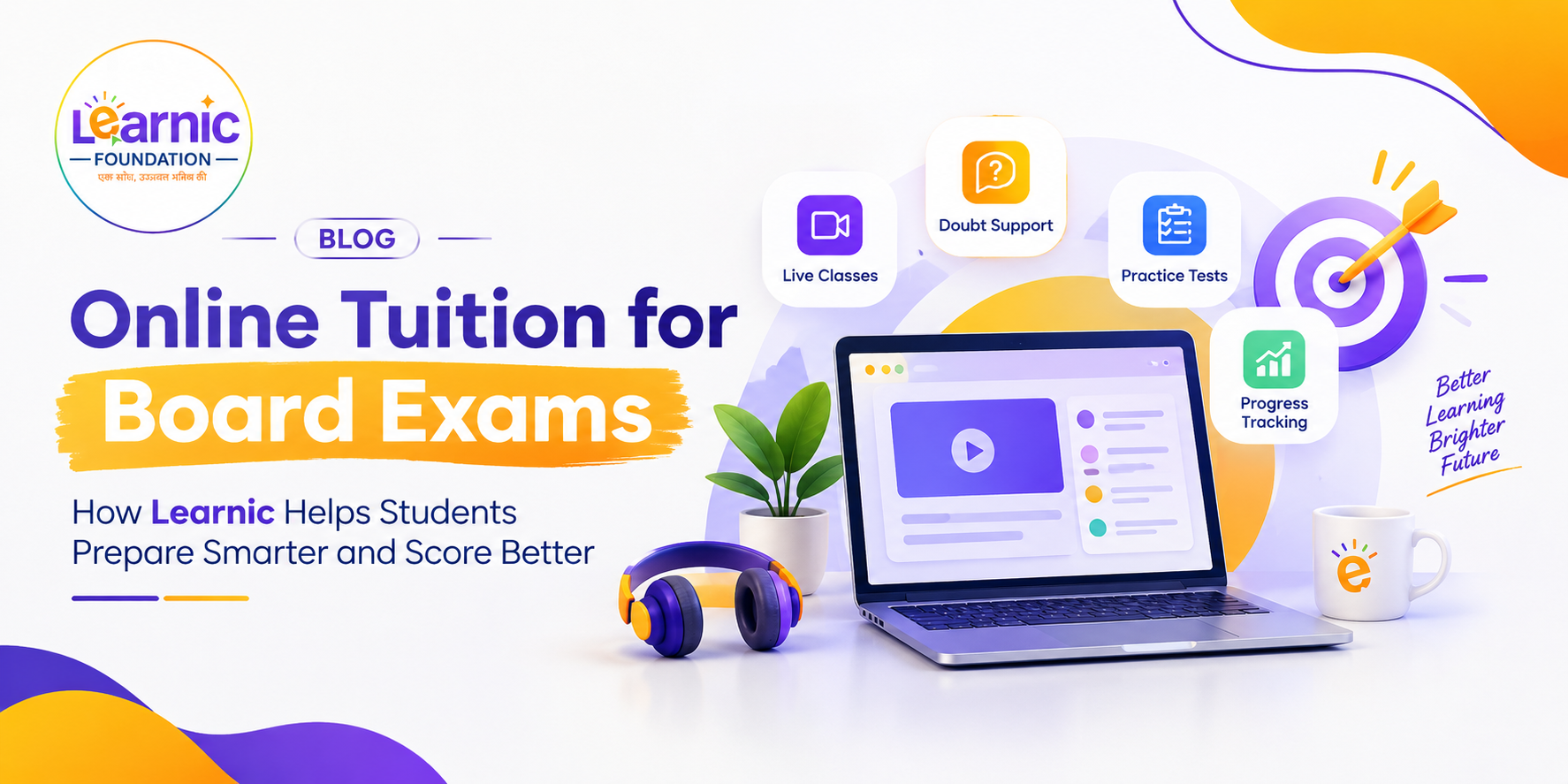
Online Tuition for Board Exams: How Learnic Helps Students Prepare Smarter
Board exams can be challenging for students because they require more than simply completing the syllabus. Students need to understand concepts, practise questions, revise regularly, clear their doubts, and become comfortable with the examination pattern.
This is where online tuition for board exams can provide additional academic support. With the right online learning platform, students can study from home while getting structured classes, practice, revision, and guidance throughout their preparation.
Why Do Students Need Extra Support for Board Exams?
During board exam preparation, students often face common challenges. Some struggle to understand difficult concepts, while others understand the chapter but find it difficult to solve questions independently. Many students also leave revision and practice until the last few weeks.
Learnic helps students create a more structured approach to their preparation by combining live online classes, concept-focused learning, assignments, doubt support, practice tests, and progress tracking in one learning environment.
Instead of simply studying for longer hours, students can focus on understanding what they are learning and improving through regular practice.
How Learnic Helps Students Prepare for Board Exams
1. Learn Concepts Through Live Online Classes
Understanding the concept is the first step toward effective board exam preparation.
Learnic's online classes give students the opportunity to learn directly from teachers and follow lessons in a structured way. Students can attend classes from home without spending time travelling to a tuition centre.
Live learning also gives students an opportunity to interact with teachers and ask questions when they face difficulty with a topic.
2. Clear Doubts Instead of Carrying Them Forward
A small doubt in one chapter can sometimes create difficulty in the chapters that follow.
Learnic provides students with doubt-solving support, helping them clarify concepts instead of simply memorising answers. This can be particularly useful for subjects such as Mathematics and Science, where understanding one concept can be important for solving the next set of questions.
3. Practise After Learning
Watching a class is not the same as being able to solve questions independently.
Learnic supports students with assignments and practice activities that allow them to apply what they have learned. Regular practice helps students identify the areas where they are making mistakes and where additional revision may be required.
A simple learning cycle can be:
Learn → Practise → Identify Mistakes → Revise → Test → Improve
4. Regular Tests for Board Exam Preparation
Students need to know whether their preparation is actually improving.
Learnic's tests and practice assessments can help students check their understanding and become familiar with answering questions under test conditions.
Instead of waiting until the final examination to discover weak areas, regular testing can help students identify those areas earlier and work on them.
5. Track Progress Over Time
Board preparation is a long process. Students need to know which subjects and topics they are improving in and where they still need more work. Learnic's progress tracking helps provide a clearer picture of a student's learning journey. This can help students and parents understand whether the student is keeping up with preparation and which areas may require additional attention.
6. Learn From Home With Greater Flexibility
One of the biggest advantages of online tuition is convenience.
With Learnic, students can access their learning environment from home, reducing the time and effort involved in travelling to a tuition centre. This can give students more time for self-study, revision, homework, and other academic activities.For students who prefer learning in a familiar environment, online tuition can make regular study more manageable.
Learnic for Class 10 and Class 12 Board Preparation
Class 10 and Class 12 are particularly important academic years, and students often need additional support during these stages.
Learnic can support students through online classes, assignments, doubt solving, practice tests, and structured revision while they continue their regular school studies.
The aim is not simply to finish the syllabus. Students should understand the concepts, practise different types of questions, analyse their mistakes, and gradually become more confident before the examination.
How Should Students Use Learnic During Board Preparation?
Joining an online tuition class is only one part of preparation. Students should actively participate in classes and follow a consistent routine.
A student can use Learnic in the following way:
Attend the live class → Understand the concept → Ask doubts → Complete assignments → Practise questions → Take tests → Analyse mistakes → Revise weak topics
Following this process consistently can help students turn online classes into an active learning experience rather than simply watching lessons.
How Learnic Can Help Parents Too
Board preparation can also be difficult for parents to monitor. Parents may know that their child is studying but may not always know which topics they understand or where they are struggling.
With structured learning, assignments, tests, and progress tracking, Learnic can give parents a better understanding of their child's academic progress.
Instead of repeatedly asking, "Did you study today?", parents can focus more on questions such as:
"What did you learn today?"
"Which topic was difficult?"
"What did you improve in this week?"
This can encourage a more positive and supportive approach toward learning.
Why Choose Learnic for Online Board Exam Preparation?
Learnic is designed to make online learning more structured, interactive, and accessible for school students.
Students can benefit from:
- Live online classes
- Interactive learning
- Teacher guidance
- Doubt-solving support
- Assignments and homework
- Practice questions
- Tests and assessments
- Progress tracking
Learning from home
These features are designed to support students throughout their preparation rather than only during the final weeks before the board exams.
Start Your Board Exam Preparation With Learnic
Board exam preparation does not have to begin when the examination timetable is released. Starting early gives students more time to understand concepts, practise questions, revise difficult topics, and improve through regular testing. With Learnic's online tuition classes, students can build a structured learning routine from home while getting the academic support they need throughout their preparation.
Whether a student needs help understanding a difficult chapter, practising more questions, clearing doubts, or preparing through regular tests, Learnic can become a part of their board exam preparation journey.
Start learning today. Build strong concepts, practise consistently, and prepare with confidence.
Frequently Asked Questions
Is Learnic suitable for board exam preparation?
Yes. Learnic provides online learning support through live classes, assignments, doubt solving, practice, tests, and progress tracking.
Can Class 10 students use Learnic for board preparation?
Yes. Learnic can provide additional academic support for Class 10 students through online learning and regular practice.
Can Class 12 students prepare for board exams with Learnic?
Yes. Class 12 students can use online classes, doubt support, assignments, practice, and assessments as part of their board preparation.
Does Learnic provide doubt-solving support?
Yes. Doubt-solving support helps students clarify concepts and work through areas they find difficult.
Can students study with Learnic from home?
Yes. Learnic's online learning model allows students to attend classes and access learning support from home.
When should students start board exam preparation?
Students should ideally start preparing well before the examination period so they have enough time for learning, practice, revision, and testing.
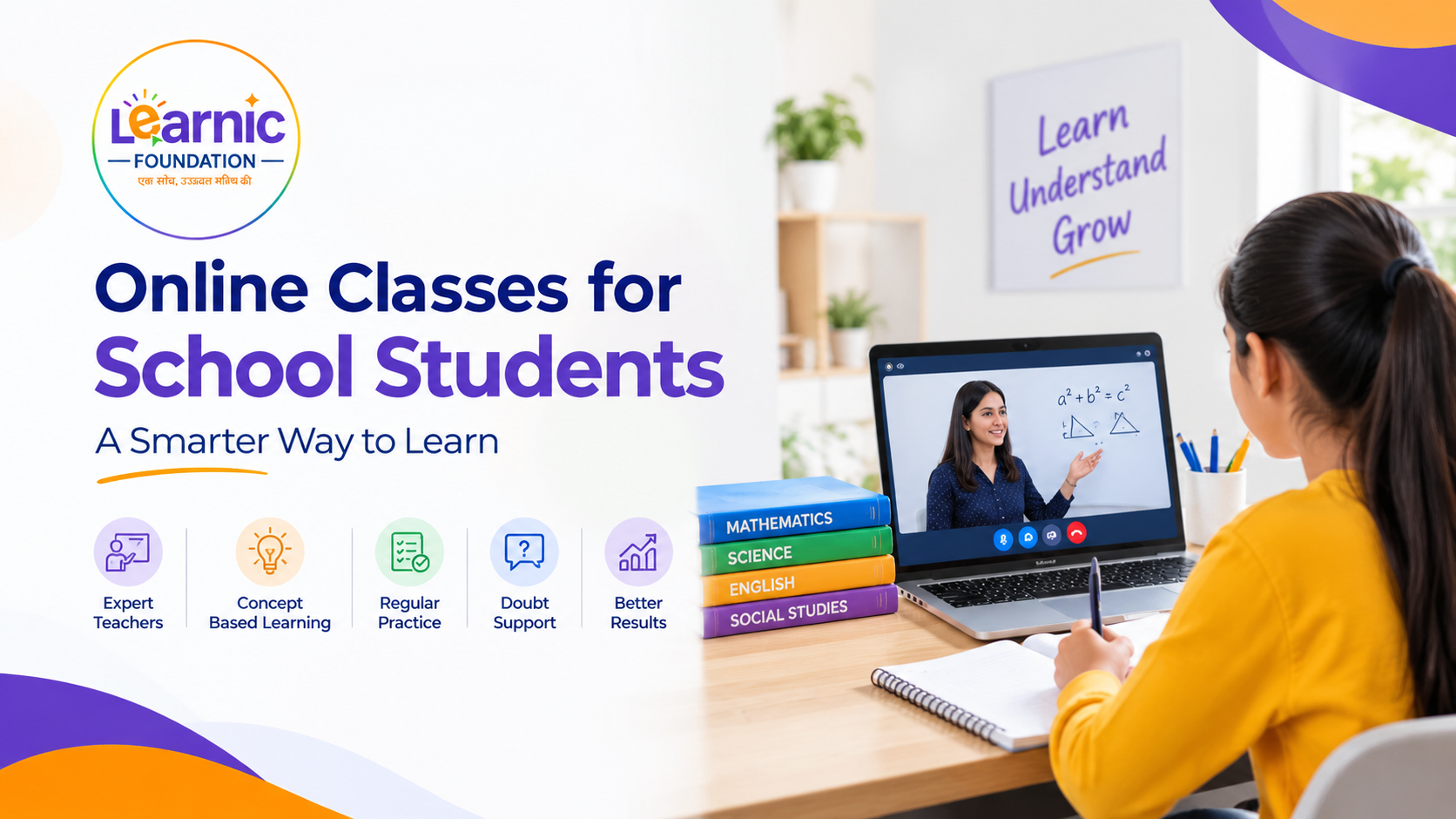
Online Classes for School Students: A Smarter Way to Learn
Education is changing rapidly, and students today have more learning options than ever before. Online classes for school students have become an increasingly accessible way to learn subjects, clarify concepts, practice regularly, and stay connected with teachers from home.
With the right online learning environment, students can study according to a structured schedule while getting access to expert guidance and learning resources. For parents, online education can also provide greater flexibility without compromising the importance of regular learning and academic support.
At Learnic Foundation, we focus on creating a learning experience that helps students understand concepts, practice consistently, and grow with confidence.
What Are Online Classes for School Students?
Online classes for school students are educational sessions conducted through digital platforms, allowing students to learn remotely with teachers and access learning resources using a computer, tablet, or smartphone.Unlike simply watching recorded educational videos, structured online classes can include:
- Live teacher-led sessions
- Concept explanations
- Doubt-solving sessions
- Assignments and practice
- Tests and assessments
- Regular academic guidance
Digital learning resources
The effectiveness of online learning depends on the quality of teaching, consistency, interaction, and the learning structure provided to students.
Why Are Online Classes Becoming Popular Among School Students?
The traditional classroom is no longer the only way students can receive academic support. Technology has made it possible for students to connect with teachers and learning resources from almost anywhere.Here are some of the reasons parents and students are exploring online classes for school students.
Flexible Learning Environment
Online learning allows students to attend classes from home without spending time travelling to a physical tuition centre.
This can make it easier to maintain a balanced routine between school, tuition, homework, revision, and other activities.
Access to Expert Teachers
Students can connect with teachers through online platforms regardless of their physical location.
A well-structured online class can give students access to experienced teachers who explain difficult concepts in a clear and systematic way.
Better Concept Understanding
One of the most important advantages of online learning is the ability to focus on concept-based learning.
Instead of simply memorizing answers, students can spend time understanding why something works and how they can apply the concept to different questions.
Convenient Access to Learning
Students can attend their classes from a familiar environment and access their learning materials digitally.
This can make the learning process more convenient for both students and parents.
How Online Classes Can Help Students Learn Better
The quality of an online class depends on more than simply having a video call with a teacher.
A productive learning environment should combine teaching, interaction, practice, revision, and feedback.
For example, a well-planned session can follow this structure:
Learn → Understand → Practice → Review → Improve
When these steps are followed consistently, students can develop a stronger understanding of their subjects.
How Learnic Foundation Supports Online Learning
Learnic Foundation is focused on providing an organized online learning experience for school students.
The aim is not simply to complete chapters but to help students understand concepts, practice what they learn, and develop better academic habits.Learnic Foundation's online learning approach can include:
- Expert teacher guidance
- Concept-focused learning
- Regular practice
- Doubt clarification
- Structured study support
- Test and assessment-based learning
Learning from the comfort of home
Students and parents can explore the available learning options through the Learnic Foundation Courses page.
Are Online Classes Suitable for Every School Student?
Online learning can be suitable for many students, but students have different learning preferences and requirements.
Some students may adapt quickly to digital learning, while others may require additional guidance to stay focused and consistent.
The most important factors are:
Good teaching + active participation + regular practice + consistent revision
When these elements are present, online learning can become a useful part of a student's academic routine.
Final Thoughts
The growing availability of online classes for school students has created new opportunities for students to access academic support from almost anywhere.However, technology alone does not create effective education. Students need good teachers, structured learning, concept clarity, regular practice, and consistent guidance. At Learnic Foundation, the focus is on creating a learning environment where students can understand what they study instead of simply memorizing information.
Frequently Asked Questions
What are online classes for school students?
Online classes for school students are structured educational sessions delivered through digital platforms. Students can learn from teachers remotely and participate in lessons, doubt sessions, assignments, and assessments.
Are online classes effective for school students?
Online classes can be effective when they provide quality teaching, student interaction, regular practice, feedback, and a structured learning plan.
What subjects can students study through online classes?
Depending on the learning program, students can study subjects such as Mathematics, Science, Physics, Chemistry, Biology, English, and Commerce-related subjects.
How can parents choose the right online classes?
Parents should consider teacher experience, teaching methodology, class structure, student interaction, doubt support, assessments, and the overall learning approach before choosing an online program.
Can students ask questions during online classes?
Yes. Interactive online classes can allow students to ask questions and clarify doubts directly with their teachers.
Does Learnic Foundation provide online learning for school students?
Yes. Learnic Foundation provides online learning support for school students, with a focus on concept understanding, teacher guidance, practice, and structured learning.
Learn. Understand. Grow.

Best Online Tuition Platform for School Students: What Should Parents Look For
Choosing the right tuition platform can play an important role in a student’s academic journey. With the growing popularity of online education, parents now have many options for best online tuition classes. But choosing the right platform is not only about fees, features, or convenience. It is about finding a learning environment where students can understand concepts, ask questions, practise regularly, and build confidence.
Learnic Foundation provides online tuition classes for school students across India, with a focus on concept-based learning, expert teaching, interactive classes, and personalised academic support.
What Should Parents Look for in the Best Online Tuition Classes
When choosing online tuition for their child, parents should consider several important factors.
1. Experienced and Supportive Teachers
Teachers are at the heart of any learning experience. The best online tuition classes should have teachers who understand school-level requirements and can explain difficult concepts in a simple and clear manner.
At Learnic Foundation, students learn with expert teachers who focus on making concepts easier to understand and encouraging students to ask questions.
2. Focus on Concept-Based Learning
Good education is not just about memorising answers for examinations. Students need to understand the concepts behind what they are learning.
Learnic Foundation focuses on helping students understand concepts clearly so they can apply their knowledge while solving different types of questions.
A strong learning process can be:
Understand → Practise → Apply → Improve
3. Interactive Online Classes
Online tuition should be more than watching lessons on a screen. Interactive classes allow students to communicate with teachers, ask doubts, participate in discussions, and understand topics more effectively.
When looking for the best online tuition classes, parents should check whether students receive opportunities for meaningful interaction with their teachers.
4. Personalised Learning Support
Every student has different learning requirements. Some students may need additional practice in Mathematics, while others may require more support in Science or other subjects.
Personalised guidance can help students identify their learning gaps and work on them with greater confidence.
Learnic Foundation aims to provide students with academic guidance and support according to their learning needs.
5. Complete Academic Support
Students often study multiple subjects throughout the academic year. Having access to structured support for different subjects can make their learning routine easier to manage.
Learnic Foundation provides online academic support designed to help school students maintain a consistent and organised learning approach.
6. Regular Practice and Assessment
Learning a concept is only the beginning. Students need regular practice and assessment to understand how well they have learned a topic.
The best online tuition classes should include opportunities for practice, revision, tests, and performance evaluation.
Regular assessments can help students identify areas that require more attention.
7. Convenient Learning From Home
One of the biggest advantages of online tuition is accessibility. Students can attend classes from the comfort of their homes without spending time travelling to a physical tuition centre.
Learnic Foundation provides online tuition across India, making it possible for students to access learning support regardless of their location.
8. Structured Learning
A well-organised learning process helps students stay consistent throughout the academic year.
At Learnic Foundation, online learning can be approached through a structured cycle:
Concept Learning → Practice → Doubt Solving → Assessment → Revision
This helps students gradually strengthen their understanding instead of studying only before examinations.
9. Effective Doubt Solving
Students naturally have questions while studying. Quick and clear doubt resolution can prevent small learning gaps from becoming bigger challenges.
Parents should therefore check how an online tuition platform handles student doubts before choosing a program.
Learnic Foundation aims to create a learning environment where students can ask questions and seek academic guidance when they need it.
Why Choose Learnic Foundation for Online Tuition?
Learnic Foundation is an online learning platform providing tuition support to school students across India.
The focus is on creating a learning experience that combines:
- Expert Teachers
- Interactive Online Classes
- Concept-Based Learning
- Personalised Academic Support
- Regular Practice
- Doubt Resolution
Structured Learning
The goal is simple: help students learn, understand, and grow.
Conclusion
Finding the best online tuition classes for a school student requires more than simply comparing prices or features. Parents should consider teacher quality, teaching methodology, concept clarity, interaction, personalised support, practice, assessments, and accessibility.
With Learnic Foundation, students can access online tuition from anywhere in India while learning in a structured and supportive environment.
The right online learning experience can help students move beyond simply memorising answers and develop stronger concepts, better understanding, and greater confidence.
Learnic Foundation — Quality Education Without Boundaries.
FAQs
1. What are the best online tuition classes for school students?
The best online tuition classes should provide experienced teachers, interactive learning, concept-based teaching, regular practice, doubt-solving, and personalised academic support.
2. Why choose Learnic Foundation for online tuition?
Learnic Foundation provides online tuition for school students across India, focusing on expert teaching, concept clarity, interactive learning, and personalised academic support.
3. Can students learn from Learnic Foundation from anywhere in India?
Yes. Learnic Foundation provides online learning support to school students across India.
4. Why is concept-based learning important?
Concept-based learning helps students understand the reason behind an answer rather than relying only on memorisation. This can help them apply their knowledge to different questions.
5. What should parents check before choosing online tuition?
Parents should consider teacher experience, teaching methodology, interaction, doubt-solving, assessments, personalised support, subject coverage, and the overall learning structure.

Syllabus Backlog? A Practical Plan to Get Back on Track
Falling behind on the school syllabus can happen to any student. A difficult chapter, missed classes, busy schedules, or simply not understanding a topic properly can slowly create a syllabus backlog. At first, missing one or two chapters may not seem like a big problem. But as new chapters continue, the unfinished work can start feeling overwhelming.
The good news is that having a backlog does not mean you cannot catch up.
With the right study plan, prioritisation, regular revision, and consistent practice, students can gradually complete their pending syllabus while keeping up with their current schoolwork.In this guide, we will look at how to clear syllabus backlog, how to prioritise chapters, and how students can get back on track without unnecessary stress.
What Is a Syllabus Backlog?
A syllabus backlog is the portion of the academic syllabus that a student has not completed, understood, revised, or practised while the rest of the class has moved ahead.For example, a student may be studying Chapter 7 in school but still have two or three earlier chapters that they have not properly understood. This creates a gap between current learning and previous learning.
A backlog can include:
- Chapters that have not been studied
- Topics that were studied but not understood
- Unfinished homework or assignments
- Topics that need additional practice
- Chapters that have not been revised
Previous concepts required to understand upcoming chapters
This is why simply "finishing chapters" is not always enough. Students need to understand, practise and revise them as well.
Why Does Syllabus Backlog Happen?
There is rarely one single reason behind academic backlog. Different students fall behind for different reasons.
1. Difficult Concepts
Some subjects, especially Mathematics and Science, are connected chapter by chapter. If a student does not understand one fundamental concept, the next topic can become more difficult.
2. Missed Classes
Absence from school or tuition can leave students with unfinished lessons. If these topics are not covered later, they can become part of a growing backlog.
3. Lack of Regular Revision
Students sometimes understand a chapter initially but forget important concepts because they do not revise them regularly.
4. Poor Time Management
School, homework, activities, examinations and other responsibilities can make it difficult for students to manage their study time effectively.
5. Studying Only Before Exams
Waiting until examinations are close can make the syllabus feel much larger than it actually is. Last-minute preparation often focuses on completing chapters rather than developing proper understanding.
How to Clear Your Syllabus Backlog
The biggest mistake students can make is trying to complete everything at once.
Instead, follow a structured approach.
Step 1: Find Out Exactly What Is Pending
Before creating a study plan for syllabus backlog, make a complete list of unfinished work.
Divide your syllabus into three categories:
Completed:
Topics you understand and can solve questions from.
Needs Revision:
Topics you have studied but need more practice with.
Not Completed:
Chapters or concepts that you have not properly studied yet.
This simple classification gives you a clear picture of where you actually stand.
Step 2: Prioritise Important Chapters
Not every pending chapter needs the same amount of time.
Start with chapters that:
- Are important for upcoming topics
- Carry significant marks in examinations
- Contain fundamental concepts
- You find particularly difficult
Are required to understand later chapters
For example, if a current Mathematics chapter depends on concepts from an earlier chapter, completing that foundation should become a priority.
Don't simply study according to chapter number. Study according to importance and dependency.
Step 3: Don't Ignore Your Current Syllabus
One of the biggest mistakes students make while clearing a backlog is stopping their current studies completely.
Imagine that your school is teaching Chapter 8 while you are trying to complete Chapter 4. If you spend all your time on Chapter 4, Chapters 8, 9 and 10 may eventually become another backlog.
A better strategy is:
Current syllabus + Backlog + Revision
For example:
- 60% of study time: Current syllabus
- 30%: Backlog
10%: Revision
The exact percentage can change depending on the student's situation, but the basic principle remains the same: clear old gaps without creating new ones.
Step 4: Break Large Chapters Into Smaller Targets
"Complete three chapters today" can sound stressful.
Instead, break each chapter into smaller tasks.
For example:
Chapter: Quadratic Equations
Day 1 → Basic concepts
Day 2 → Important formulas and examples
Day 3 → Basic questions
Day 4 → Application-based questions
Day 5 → Revision + test
Small targets make the backlog feel manageable and make it easier to track progress.
Step 5: Understand Before Memorising
A syllabus backlog is not truly cleared if a student has simply memorised answers.
Students should ask:
- Why does this formula work?
- How is this concept connected to the previous chapter?
- Can I explain this topic in my own words?
Can I solve a new question using the concept?
Concept-based learning helps students build knowledge that can be applied to different questions instead of memorising one fixed answer.
This is especially important for subjects such as Mathematics and Science, where understanding one concept can make several related topics easier.
Step 6: Practise After Learning
Reading a chapter is only one part of studying.
After completing a topic, students should solve questions without immediately looking at the solution.
A simple process is:
Learn → Understand → Practise → Check → Improve → Revise
If you repeatedly make mistakes in a particular type of question, don't simply move on. Identify why the mistake is happening and practise that concept again.
Step 7: Use a Weekly Backlog Review
At the end of every week, spend some time reviewing your progress.
Ask yourself:
What did I complete this week?
Which topics are still unclear?
Which chapters need more practice?
Am I keeping up with my current school syllabus?
You can maintain a simple tracker:
| Subject | Pending Topic | Status |
|---|---|---|
| Mathematics | Chapter 4 | Completed |
| Science | Chapter 6 | Needs Practice |
| English | Grammar | Revision |
| Social Science | Chapter 5 | Pending |
Seeing your progress can make a large backlog feel much more manageable.
How Many Hours Should a Student Study to Clear a Backlog?
There is no single number of hours that works for every student.
Studying for long hours does not automatically mean effective learning.
Instead of asking:
What If You Don't Understand a Backlog Chapter?
This is where many students get stuck.
If you have tried reading a chapter multiple times but still cannot understand it, repeating the same method may not solve the problem.
You can:
- Ask your school teacher
- Discuss the topic with a teacher or tutor
- Use reliable educational resources
- Break the concept into smaller parts
- Solve basic questions before advanced ones
Identify the earlier concept you may have missed
Sometimes the problem is not the current chapter. The real gap may be in a previous concept.
For students taking online tuition classes, personalised guidance can help identify these learning gaps and provide additional support where needed.
How Online Tuition Can Help Students With Backlogs
Online tuition can be useful when students need structured academic support outside regular school hours.
A good learning environment can help students:
- Understand difficult concepts
- Ask questions and clear doubts
- Follow a structured study schedule
- Get additional practice
- Revise difficult topics
Stay consistent with their studies
However, tuition should support learning rather than replace a student's own effort. Students still need regular practice, revision and self-study.
At Learnic, the focus is on helping students understand concepts rather than simply memorising answers. With structured learning and personalised attention, students can work on difficult topics while continuing with their regular academic syllabus.
A Simple 7-Day Backlog Recovery Plan
If you don't know where to start, try this basic 7-day study plan.
Day 1: List your complete backlog and prioritise topics.
Day 2: Start with the most important pending concept.
Day 3: Continue the topic and solve basic questions.
Day 4: Work on another important pending topic.
Day 5: Practise questions from the topics covered during the week.
Day 6: Revise difficult concepts and solve a short self-test.
Day 7: Review your progress and create the next week's plan.
The goal isn't to finish your entire backlog in seven days. The goal is to create momentum and establish a consistent system.
Don't Let Backlog Turn Into Exam Panic
A backlog becomes more stressful when students keep postponing it.
The solution is not studying everything in one night. It is taking one topic at a time and working consistently.
Remember:
You don't need to finish everything today.
You need to start today.
A clear plan, realistic targets, regular practice and the right academic support can help students gradually close their learning gaps and stay on track.
Final Takeaway
A syllabus backlog is a problem that can be solved with the right strategy. Instead of worrying about how much work is pending, focus on what you can complete today.
Identify your gaps.
Prioritise important concepts.
Keep up with your current syllabus.
Practise what you learn.
Revise regularly.
Ask for help when you need it.
One chapter at a time, one concept at a time — you can get back on track.
Learnic — Building Concepts, Not Just Answers.
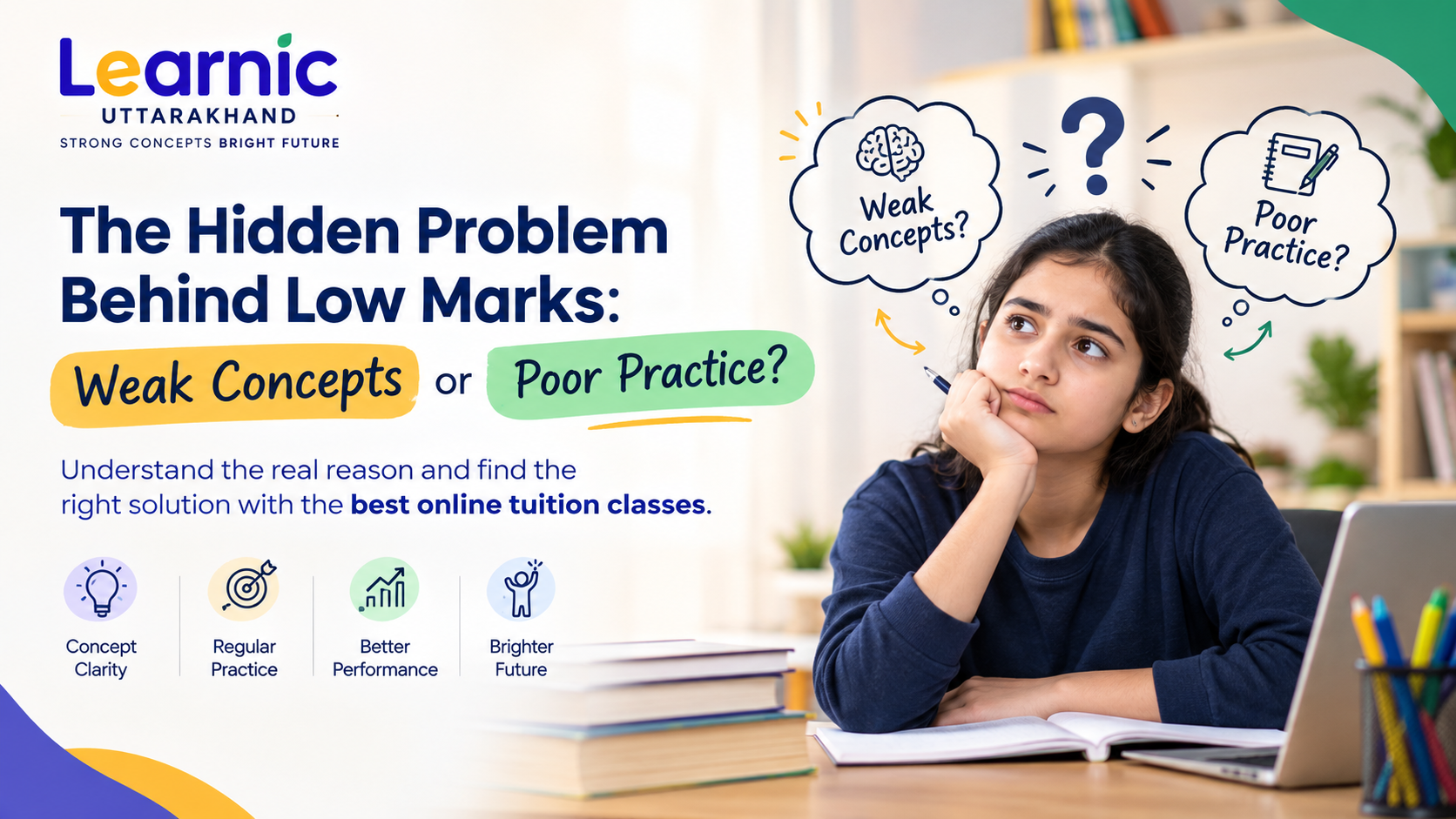
The True Reason for Getting Low Marks: Weak Concepts or Lack of Practice?
The True Reason for Getting Low Marks: Weak Concepts or Lack of Practice?
Low grades are often seen as an obvious signal that a student should put in more efforts into studying. However, the true reason might be totally different. A student might spend long hours in front of their books and still fail at the exam because it is not always the problem of effort. It can be about weak concepts. It can also be a result of a lack of practice.
Discovering the true reason is the first step towards enhancing academic performance.
Weak Concepts: Missing Foundation
Picture yourself trying to deal with algebraic problems without having strong knowledge of basic mathematical operations. As hard as you try to solve them, you will keep making the same mistakes.
Concepts can cause problems for a student because any further topic is usually based on previous knowledge. In case of missing foundation, every next chapter is becoming harder and harder.
A typical phrase of a student with weak concepts is "I understood it during the lecture, but I cannot do it myself.
Poor Practice: When Understanding Is Not Enough
In some cases, the opposite may be true. The student will understand everything about the topic well during the lessons but ends up scoring badly during examinations.
Why?
Understanding a topic and applying it are two different things.
Practicing enables the students to get accustomed to all sorts of questions, and improves their level of precision, management of time, as well as recognizing their mistakes. Lack of practice may make even a well-understood topic difficult to answer if faced with unfamiliar questions during an examination.
Mathematics and Sciences require practice since they involve application of concepts.
How Can Parents Identify the Real Problem?
Instead of immediately demanding that their child studies for a longer period of time, parents can see how their children deal with the problems.
If a student cannot explain a concept to the parents in his/her own words, then he/she definitely needs to develop their conceptual skills further.
If a student is able to explain a concept, but has some difficulties while solving the problem, then this is probably a lack of guided practice.
And finally, if the student solves the problems easily at home, but makes mistakes when sitting for an exam, there might be such contributing elements as lack of time-management skills, pressure of exams or insufficient revision.
So, the right solution should be based on the actual learning gaps.
The Right Balance Between Concepts and Practice
There is no need to choose between concepts and practice while developing good learning routines.
Concepts lay the foundation. Practice creates confidence.
An effective learning routine starts with an understanding of the topic, then goes through examples, guided practice, and independent practice and ends with revising mistakes.
How Online Tuition Classes Can Help
With the right learning support, students can work on both conceptual clarity and regular practice. Best online tuition classes can provide structured lessons, doubt-solving support, practice questions and revision according to the student's academic needs.
At Learnic, the focus is not simply on completing chapters. The aim is to help students understand concepts, ask questions, practise regularly and develop confidence in their learning.
Because improving marks is not only about studying for longer. It is about understanding what is going wrong and using the right learning approach to fix it.
Learnic — Strong Concepts, Bright Future.
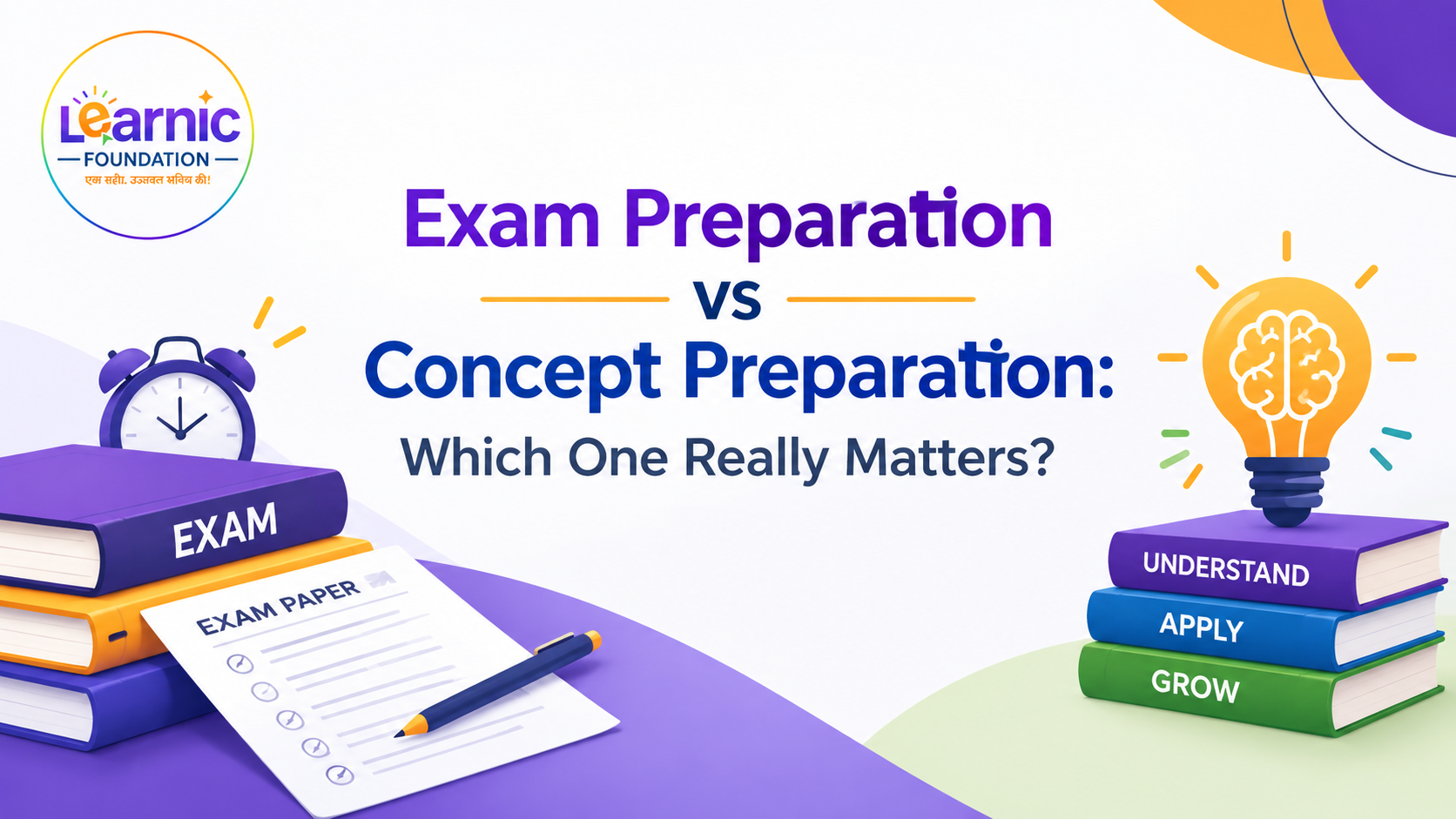
Best Online Tuition Classes | Exam vs Concept Preparation – Learnic
For many students, exam preparation means completing the syllabus, memorising important questions, revising notes, and taking tests. While these activities are important for scoring well, true education goes beyond preparing for the next examination. Students also need to understand the concepts behind what they are learning. This is where the difference between exam preparation and concept preparation becomes important.
What Is Exam Preparation
Exam preparation is mainly focused on achieving good performance in a particular examination. It includes revising chapters, practising sample papers, solving previous-year questions, remembering important formulas, and improving time management. Regular tests and revision can help students become familiar with the examination pattern and identify areas that need more attention.
However, exam-focused learning can sometimes become limited to memorising information. A student may remember an answer for an examination but forget it shortly afterwards. This may help with short-term performance but does not always create strong academic foundations.
What Is Concept Preparation?
Concept preparation focuses on understanding the subject rather than simply remembering information. Students learn why something works, how it works, and where they can apply it.
For example, in Mathematics, memorising a formula may help a student solve a familiar question. But understanding the concept behind the formula helps the student approach a new type of problem as well. Similarly, in Science, understanding a process makes it easier to remember and apply than simply memorising a textbook definition.
Concept preparation encourages students to ask questions, understand their mistakes, connect different topics, and solve problems independently.
Why Concept Preparation Matters
Strong concepts create a foundation for future learning. Topics taught in higher classes often depend on knowledge gained in previous classes. If the basics are unclear, students may find advanced topics increasingly difficult.
Concept-based learning also improves problem-solving and confidence. When students understand a topic, they do not have to depend entirely on memorised answers. They can think about a question, identify the relevant concept, and work towards the solution.
This is especially useful for students preparing for school examinations as well as competitive examinations such as JEE and NEET.
Can Students Score Well Without Understanding?
Sometimes, yes. Repeated revision and memorisation can help students score well when questions are familiar. But examinations increasingly require students to understand, apply, and analyse concepts.
If a familiar question is changed slightly, a student who has only memorised the answer may become confused. A student with strong conceptual understanding is more likely to adapt because they know the logic behind the answer.
Therefore, good marks and strong concepts should work together rather than being treated as separate goals.
The Right Approach: Understand, Practise and Revise
Students do not have to choose between exam preparation and concept preparation. The most effective approach combines both.
First, understand the concept. Then practise different types of questions. After that, revise the important points and take regular tests to measure progress.
This approach helps students prepare for examinations while also developing knowledge that remains useful beyond a single test.
How Learnic Supports Better Learning
At Learnic, the focus is not only on helping students complete their syllabus but also on making learning easier to understand. Through structured learning, concept-focused teaching, doubt solving, regular practice, and academic support, students can work towards building stronger foundations.
For parents searching for the best online tuition classes, it is important to look beyond simply finding classes that promise better marks. The right learning environment should encourage students to understand concepts, ask questions, practise consistently, and develop confidence in their subjects.
Exam Preparation or Concept Preparation: What Really Matters?
The answer is simple: both matter, but concepts should come first.
Exam preparation helps students perform well when it matters, while concept preparation helps them understand what they are actually learning. When the two are combined, students can prepare for examinations without sacrificing long-term understanding.
At Learnic, the aim is to make students more confident learners—not just better exam takers.
Understand the concept. Practise with purpose. Prepare with confidence. Learn for the future.

Turn Your Screen Into Your Classroom: A Smarter Way to Learn Online
Education is no longer limited to a traditional classroom. With the growth of digital learning, students can now access quality education from the comfort of their homes. A laptop, tablet, or even a suitable digital device can become a complete learning space where students can attend classes, ask questions, practice concepts, and continue their academic journey.But online education is not simply about attending a class through a screen. The real goal is to make learning understandable, engaging, flexible, and effective.This is where Learnic Foundation aims to make a difference.
Turn Your Screen Into Your Classroom
Imagine having your classroom available without travelling to a tuition centre.
You can sit at your study table, open your device, connect to your class, and begin learning. The physical location may have changed, but the purpose remains the same — understand the subject, clear your doubts, practice regularly, and improve step by step.
Online tuition gives students the flexibility to learn in a familiar environment while staying connected with teachers and structured academic support.
At Learnic Foundation, the idea is simple:
Turn Your Screen Into Your Classroom.
Learn. Understand. Grow.
Why Online Tuition Is Becoming a Preferred Choice
Every student learns differently. Some students understand a topic quickly, while others need additional explanation and practice before they feel confident. A traditional classroom may not always allow enough time to address every individual learning gap. Online tuition can create a more focused learning environment where students can receive additional academic support alongside their regular school education.
For parents searching for the best online tuition platform for school students, the important question should not simply be whether classes are online.
The better question is:
Does the platform actually help the student learn?
A good online learning experience should focus on teaching quality, concept clarity, doubt support, regular practice, and consistent academic progress.
1. Learn From the Comfort of Home
One of the biggest advantages of online tuition is convenience.
Students don't have to spend additional time travelling to and from a tuition centre. Their learning environment can be created right at home.
This gives students more time for:
School studies
Revision
Practice
Rest
Extracurricular activities
The result is a learning routine that can fit more naturally into a student's daily schedule.
2. Focus on Concepts, Not Just Answers
Getting the correct answer is important, but understanding why the answer is correct is even more important.
Strong academic performance begins with strong concepts.Instead of encouraging students to simply memorize answers, effective tuition should help them understand the fundamentals of a subject and apply what they learn to different types of questions.
This approach can be particularly valuable in subjects where one weak concept can make future chapters more difficult.
At Learnic Foundation, the focus is on creating a learning experience where students can:
Understand → Practice → Apply → Improve
3. Clear Doubts Without Hesitation
A small doubt can become a major learning gap if it remains unresolved.
Students should feel comfortable asking questions whenever they do not understand something.
Online learning can make doubt-solving an integral part of the learning process rather than something students have to postpone until the next class.When students understand their doubts at the right time, they can move forward with greater confidence.
4. Learn From Anywhere
One of the biggest strengths of online education is accessibility. Students are not restricted to a particular physical tuition centre. Whether they are at home or temporarily staying in another city, learning can continue as long as they have the required digital access.This is particularly useful for families looking for quality academic support without being limited by their location.For this reason, online tuition has become an increasingly attractive option for school students across India.
5. Make Screen Time Productive
Students already spend a significant amount of time using digital devices.The goal should not always be to reduce screen time. It can also be about making screen time meaningful.Instead of using a screen only for entertainment, students can use it to:
Attend live classes
Study concepts
Solve questions
Revise lessons
Clear doubts
Practice regularly
With the right learning environment, the same screen can become a powerful educational tool.
6. Learning Beyond the School Classroom
School education provides the foundation for a student's academic journey, but additional tuition can provide extra support when a student needs more practice or explanation.Online tuition can complement school learning by helping students revisit difficult concepts, strengthen weak areas, and prepare more confidently for tests and examinations.The purpose is not to replace school.It is to support the student's learning journey beyond the school classroom.
What Should You Look for in the Best Online Tuition Platform for School Students?
With so many online education options available, choosing the right platform can sometimes be confusing for parents.
Instead of choosing a platform only because of advertisements or promises, look for the things that genuinely contribute to learning.
Expert Teaching Teachers should be able to explain concepts clearly and make difficult topics easier to understand.
Concept-Based LearningThe focus should be on understanding concepts instead of encouraging students to rely only on memorization.
Doubt Support Students should have an opportunity to ask questions and clarify their confusion.Regular Practice
Learning becomes stronger when students regularly practice what they have learned. Flexible Learning Online tuition should fit into a student's school schedule and daily routine.
Student-Focused Approach
Every student has different strengths, weaknesses, learning speeds, and academic needs. A good learning environment should recognize these differences.These are some of the factors parents can consider when looking for the best online tuition platform for school students.
Why Choose Learnic Foundation?
Learnic Foundation is built around a simple idea — make quality learning accessible through technology without losing the importance of understanding and personal academic support. With online learning, students can turn their everyday digital environment into a dedicated learning space.
The focus is on:
Expert Faculty
Concept-Based Learning
Doubt Support
Regular Practice
Better Learning
The goal is not simply to complete another class.The goal is to help students learn, understand, and grow.
FAQs – Turn Your Screen Into Your Classroom
1. What is online tuition for school students?
Online tuition allows school students to attend live or structured classes through digital devices from the comfort of their homes.
2. Is online tuition effective for school students?
Yes. With proper guidance, regular practice, doubt clearing, and concept-based teaching, online tuition can support students in understanding subjects more effectively.
3. How can I choose the best online tuition platform for school students?
Look for a platform that provides experienced teachers, concept-focused learning, regular practice, doubt support, and a structured learning approach.
4. Can students learn from home through Learnic Foundation?
Yes. Learnic Foundation provides online learning that allows students to continue their studies from wherever they are.
5. Does online tuition help students clear their doubts?
Yes. Interactive online classes can give students opportunities to ask questions, discuss difficult topics, and get guidance from teachers.
6. What subjects can students study through online tuition?
Students can receive online tuition support for major school subjects, depending on the classes and programs offered.
7. Is online learning suitable for students of different learning levels?
Yes. Online learning can be useful for students who need additional academic support as well as those who want to strengthen their concepts and practice regularly.
8. Why should students choose Learnic Foundation?
Learnic Foundation focuses on helping students learn, understand, and grow through structured online education and concept-based learning.
9. Can online tuition make screen time more productive?
Absolutely. Instead of using screens only for entertainment, students can use them as a productive learning environment for classes, practice, and academic development.
10. How can I start online tuition with Learnic Foundation?
Students and parents can contact Learnic Foundation to learn more about the available online tuition programs and begin their learning journey.

How Online Tuition Is Changing the Way Students Learn | Learnic Foundation
Changes In Learning Process Due To Online Tuition
The face of education has undergone great changes during the past few years. It is no longer possible to learn things and prepare yourself for an examination only in a conventional classroom setting. The availability of advanced technology and internet facility makes it possible for students to take tuition classes while sitting in the comforts of their houses.
For those who are seeking academic assistance for themselves or their children in a convenient and efficient manner, opting for the best online tuition classes may bring a lot of differences in your life.
Learning Beyond the Traditional Classroom
In a traditional classroom, all the students learn at the same speed. There will be some students who learn something fast whereas there will be other students who require extra time for grasping that topic. Due to limited time in classrooms, teachers are unable to pay individual attention to each student.Here comes the role of online tuition in resolving this problem. Online tuition helps students in attending the classes from their home and discussing the issues with the teachers over digital platform.
This method helps students to make learning more convenient, particularly for those who require special assistance in some subject. Online tuition classes that are the best in the world are those which provide proper learning with convenience.
Better Access to Expert Teachers
One of the biggest advantages of online education is accessibility. Students are no longer limited to teachers or coaching centres available in their immediate area.
With online tuition, students can connect with experienced teachers from different locations. This gives them the opportunity to find teaching that matches their learning requirements and academic goals.
For students preparing for school examinations and board exams, having the right guidance can make a significant difference. A teacher who explains concepts clearly can help students move beyond memorising answers and develop a stronger understanding of the subject.
Personalized and Flexible Learning
Every student learns differently. Some students understand concepts through examples, while others need repeated explanations and practice. Online learning makes it easier to create a more flexible learning experience.
Students can attend classes according to a structured schedule while using digital resources for additional practice. They can also spend more time on topics they find difficult instead of simply moving forward with the rest of the class.
This flexibility is particularly useful for students who want to balance studies with other activities such as sports, hobbies, competitions, or school assignments.
How Technology Helps Make Education Interactive
Moreover, technology has made online education much more interactive. Online presentations, virtual whiteboards, visual explanation, online quizzes, test series, and educational material will help in making the complex concepts easy for students.
For instance, a Science topic will be explained with the help of illustrations, whereas complex Mathematical problems will be solved by using the digital board.
This approach will help in motivating the students towards being proactive rather than passive during the lesson. It is one of the main reasons why so many students prefer taking up the best online tuition classes that have integrated technology with teaching.
Consistent Practice and Immediate Feedback
Learning a topic is not enough. In order to improve the performance of students, consistent practice becomes necessary.
Online platforms help in conducting various quizzes, assignments, test series, and assessment in an easy manner. Consistent testing of students helps in identifying the weak and strong areas of students before examinations.
It is equally essential to give feedback to the students regarding the mistakes they are making in their performance.
The Future of Student Learning
Online tuition is becoming an important part of modern education because it offers flexibility, accessibility, and new ways of learning. However, technology alone cannot guarantee better results. Effective learning still depends on good teaching, consistent practice, discipline, and student participation.
The future of education is likely to combine the strengths of traditional teaching with the flexibility of digital learning. Students will have more opportunities to access quality education, learn at their own pace, and receive support based on their individual needs.
Conclusion
The way students learn is changing, and online education is playing an important role in that change. From accessing expert teachers to practising through digital resources and receiving regular feedback, students now have more tools to support their academic journey.
Ultimately, successful learning is not about studying longer—it is about learning smarter, understanding concepts, and applying knowledge with confidence. With the right guidance and consistent effort, online tuition can help students build stronger academic foundations and prepare themselves for a brighter future.
For students and parents, finding the best online tuition classes means choosing an approach that combines experienced teaching, concept clarity, flexibility, regular practice, and continuous academic support. With the right learning partner, technology can turn online education into a meaningful and effective learning experience.

Why Do Some Children Love Learning While Others Avoid It
Why Do Some Children Love Learning While Others Avoid It?
Have you ever wondered why some children happily explore new topics, ask endless questions, and enjoy learning, while others try every possible excuse to avoid their books?
It is tempting to call a child “lazy” or “not interested in studies.” But the real reason is often much deeper. A child’s attitude toward learning can be influenced by confidence, teaching methods, past experiences, pressure, and whether they actually understand what they are studying.
Learning Starts With Curiosity
Children are naturally curious. They want to know how things work and why things happen. But when learning becomes only about completing chapters, memorising answers, and scoring marks, curiosity can gradually disappear.
A child is more likely to enjoy learning when they can connect a concept with real life.
For example, Maths becomes more interesting when students understand how percentages are used for discounts, shopping, money management, or everyday decisions.
Confidence Changes Everything
Many children don't avoid a subject because they hate it. They avoid it because they are afraid of getting it wrong.
Imagine a student who struggles with Maths repeatedly. After several unsuccessful attempts, they may start thinking, “I'm just not good at Maths.” Eventually, they may stop trying altogether.
This is why small achievements matter. Understanding one difficult concept, solving a problem independently, or answering a question correctly can slowly rebuild confidence.
When children feel capable, they become more willing to learn.
Every Child Doesn't Learn the Same Way
Some students understand concepts quickly through examples, while others need visual explanations, practical activities, repetition, or step-by-step guidance.
Simply telling a child to “study harder” doesn't always solve the problem. Sometimes, the solution is to change the way the concept is explained.
The right teaching approach can turn a confusing chapter into something a student can actually understand.
Mistakes Are Part of Learning
A child who is constantly afraid of making mistakes may eventually stop asking questions.
Instead of making students feel embarrassed about wrong answers, we should help them understand where they went wrong and encourage them to try again.
A simple change from “How did you get this wrong?” to “Let's find where the confusion started” can make learning feel much safer.
What Can Parents Do?
Parents don't have to become teachers at home. They can simply create a positive environment around learning.
Instead of asking only, “How many marks did you get?”, try asking:
- What did you learn today?
- Which topic was difficult?
- What did you find interesting?
- Can you explain this concept to me?
These questions shift the focus from marks to understanding and curiosity.
How Learnic Supports Better Learning
At Learnic Uttarakhand, learning is not just about finishing the syllabus. Students need to understand concepts, ask questions, practise regularly, and develop the confidence to solve problems independently.
With the right guidance and learning environment, even a child who once avoided studies can begin to enjoy the process.
Final Thought
Every child can learn. Sometimes, they simply need a different approach, a little encouragement, and someone who believes they can do it.
Because the goal isn't to make children study more. It's to help them discover why learning is worth it.

Why Asking Questions Makes You a Better Learner | Learnic
Reasons Why Questioning Can Improve Your Ability to Learn
Questioning is the easiest but most effective way that can make students enhance their learning process. It does not matter whether it is a complex mathematics question, a difficult science topic or any other English subject; asking questions can help students move away from simple memorizing and comprehend more.
There are many students who do not like asking questions because they are afraid of being less knowledgeable or doing mistakes. But the truth is that asking questions is not about weakness; it is about being inquisitive and learning actively.
How Asking Questions Can Help You in Learning Better
1. Develop Deeper Comprehension
Learning through memorization or reading does not necessarily mean that you have comprehended it well. Asking questions like "Why does this happen?", "How does this work?" and "Can you give me an example?" can make you think deeper on any subject.
It becomes very important when we are talking about mathematics and science subjects.
2. Helps to Spot Gaps in Learning
At times, students keep on studying without knowing that they do not get the basic idea. Questioning helps them to spot such problems early.
For instance, when a student lacks the knowledge of fractions, other aspects of Mathematics may become challenging. Solving the problem on time can stop confusion from developing further.
3. Develops Analytical Skills
Questions help students to think, analyze, compare and solve the problem. Instead of just taking information for granted, they start asking 'why', 'how' and 'what if'. It helps in developing analytical skills and solving skills which are not only helpful in exams but even in everyday life.
4. Builds Confidence
Frequent questioning helps students to get comfortable with voicing out their views and thoughts. Resolving doubts will increase their confidence level.
This results in a positive learning cycle: Ask -> Understand -> Practice -> Get Better.
Ways Students Can Formulate Effective Questions
Students don't have to formulate complex questions. Some simple questions would be:
Why does this happen?
How did we arrive at this answer?
Could you give an example to explain it?
What is the difference between these two concepts?
Where could we apply this in real life?
Maintaining a "Doubt Notebook" while studying is also beneficial for students who could raise their doubts with the help of this notebook to their teachers either in class or during doubt solving sessions.
Ways Teachers Could Promote Questioning
A friendly atmosphere in class could motivate students to formulate and ask questions. Teachers could encourage students to ask questions by accepting them, providing real-life examples and making students express some concepts.
It could also be promoted by parents through listening to children's questions rather than demotivating them.
FAQs
Why is asking questions important for students?
It helps students understand concepts clearly, identify doubts, and develop critical thinking skills.
Does asking questions improve academic performance?
Yes. Better understanding and active participation can help students perform more effectively in examinations.
How can students become better at asking questions?
Students can start by asking simple “why,” “how,” and “what if” questions and maintaining a doubt notebook.

Is Your Child Studying or Just Spending Time With Books?
A practical guide for parents to understand whether their child is truly learning
Your child sits at the study table. The books are open, the notebook is beside them, and they appear to be studying for hours.
As a parent, you may naturally think, “At least my child is studying regularly.”
But here is the important question:
Is your child actually learning, or simply spending time with books?
These two things may look similar from the outside, but they are very different.
A student can spend three hours reading a chapter and still struggle to explain it the next day. Another student may spend just one focused hour understanding the concept, practising questions, and reviewing mistakes—and remember much more.
For parents searching for effective tuition classes in Dehradun, this distinction is especially important. The goal of education should not be to increase the number of hours a student sits with books. The goal should be to improve understanding, confidence, application, and independent learning.
Studying and Learning Are Not the Same Thing
Studying is an activity. Learning is the outcome.
A student may read a textbook, highlight important lines, copy notes, watch an educational video, or revise a chapter. All of these can be part of studying.
But genuine learning happens when the student can use that knowledge independently.
For example, a student may memorise the formula for calculating the area of a circle. That is studying.
If the student can understand what the formula means, identify when to use it, and solve an unfamiliar problem correctly, that demonstrates learning.
This difference becomes increasingly important as students move into higher classes, where simply memorising information is often not enough. They need to understand concepts and apply them to different types of questions.
7 Signs Your Child May Be Spending Time Studying Without Learning Effectively
1. Your Child Studies for Hours but Completes Very Little
Study time alone does not tell you how productive a session was.
If your child spends two or three hours at the table but completes very little work, frequently changes subjects, gets distracted, or spends excessive time on one small task, the problem may be the study method rather than a lack of effort.
Instead of asking:
“How many hours did you study?”
try asking:
“What did you learn today?”
This simple question shifts the focus from time to progress.
2. Your Child Keeps Reading the Same Chapter
Repeated reading can make information feel familiar.
The problem is that familiarity can sometimes be mistaken for understanding.
After your child finishes a topic, ask them to close the book and explain the main idea in their own words.
If they can explain it clearly, that is a positive sign.
If they immediately need to open the textbook, they may need more active learning and recall practice.
3. They Understand the Example but Cannot Solve a New Question
This is common in Mathematics and Science.
A student may follow a teacher while a problem is being solved and think, “I understand this.”
But when given a slightly different question, they may not know where to begin.
This usually indicates that the student has understood the example at a surface level but has not yet developed enough conceptual understanding to apply the idea independently.
Good learning should gradually move from:
Understanding → Practice → Application → Independent Problem-Solving
4. They Forget the Topic Shortly After the Test
If your child studies a chapter one night before an examination and remembers it only until the test, the information may not have been consolidated effectively.
Learning requires revisiting important concepts over time.
Regular revision is generally more useful than trying to relearn an entire syllabus immediately before an examination.
5. Your Child Makes the Same Mistakes Again and Again
Mistakes are not necessarily a problem.
In fact, mistakes can be an important part of learning.
The concern is when a student makes the same mistake repeatedly without understanding why it happened.
After a test or practice session, encourage your child to ask:
- What did I get wrong?
- Why did I make the mistake?
- Did I misunderstand the concept?
- Was it a calculation error?
- Did I misread the question?
What can I do differently next time?
A mistake that is understood can become a learning opportunity.
6. Their Notebook Is Excellent, but Their Understanding Is Weak
Neat notes are useful.
However, beautifully written notes do not automatically mean that a student understands the subject.
Sometimes students spend a significant amount of time copying material, highlighting every important sentence, or rewriting notes instead of solving questions and testing their understanding.
The purpose of notes should be to support learning, not replace it.
7. Your Child Says, “I Studied Everything,” but Struggles in Tests
This can be frustrating for both students and parents.
The student genuinely believes they prepared, yet their test performance does not reflect the effort.
This can happen when preparation focuses too heavily on reading and recognition instead of recall, practice, application, and exam-style questions.
The solution is not always “study more.”
Sometimes the student needs to study differently.
A focused session can include four simple stages:
Step 1: Recall
Before opening the textbook, ask:
“What do I already know about this topic?”
Step 2: Understand
Study the new concept carefully. Focus on understanding the meaning rather than simply memorising sentences.
Step 3: Apply
Solve questions without immediately looking at the solution.
Step 4: Review
Look at mistakes and identify what needs more practice.
This approach makes the student an active participant rather than someone who simply reads information.
Progress tracking: Is the student's improvement monitored over time?
Exam preparation: Are students taught how to approach different types of questions and manage examination pressure?
Most importantly, parents should look for a learning approach that encourages students to think instead of simply memorising.
How Learnic Dehradun Can Support Better Learning
At Learnic Dehradun, the focus should go beyond keeping students occupied with textbooks and homework.
Students need an environment where they can ask questions, understand concepts, practise regularly, identify their mistakes, and build confidence step by step.
Whether a student is struggling with a particular subject or simply wants to develop better academic habits, structured guidance can help turn study time into meaningful learning.